


Pancreatitis in Dogs: Symptoms, Causes & Feeding
February 20, 2025 | By David Jackson, AllAboutDogFood.co.uk

What is Pancreatitis
The pancreas is an organ that fulfils two very important roles in dogs - firstly, it secretes hormones like insulin and glucagon to help control blood sugar level and, secondly, it produces enzymes to help in the breakdown of carbohydrates, proteins and, especially, fats.
Any time the pancreas becomes inflamed, it is called pancreatitis and when that occurs, the flow of enzymes into the digestive tract can become disrupted, forcing the enzymes out of the pancreas and into the abdominal area. These enzymes can then begin to break down the fat and proteins in the other organs, as well as in the pancreas itself and the results can be very severe.
@allaboutdogfood Replying to @leahann For everyone who has asked for advice when feeding their dogs with pancreatitis. #allaboutdogfood #dognutrition #dogfood #dogpancreatitis ♬ original sound - AllAboutDogFood
Acute vs Chronic Pancreatitis
Pancreatitis is generally described as being either acute and chronic. Acute pancreatitis is an isolated episode of usually severe pancreatic inflammation while chronic pancreatitis is a longer standing inflammation which can continue for months or even years.
It's important to note, though, that acute and chronic pancreatitis are not mutually exclusive - acute pancreatitis, for example, may lead to chronic pancreatitis and it is possible for dogs with chronic pancreatitis to experience episodes of acute pancreatitis.
What Are The Symptoms of Pancreatitis
 In both cases, the most common signs of pancreatitis are fever, vomiting, diarrhoea, loss of appetite, weight loss, dehydration, lethargy and abdominal pain (especially after eating).
If you suspect your dog is suffering from pancreatitis, it is very important that you first seek the advice of your vet in order to confirm the diagnosis and ensure that all necessary medical steps are taken before moving on to the dietary measures suggested below.
What Causes Pancreatitis in dogs
There are several possible causes of inflammation to the pancreas. High levels of fat in the blood (lipemia) is the most common cause but trauma to the pancreas, hypercalcemia (excessive calcium in the blood), and some drugs and toxins can also result in pancreatitis.
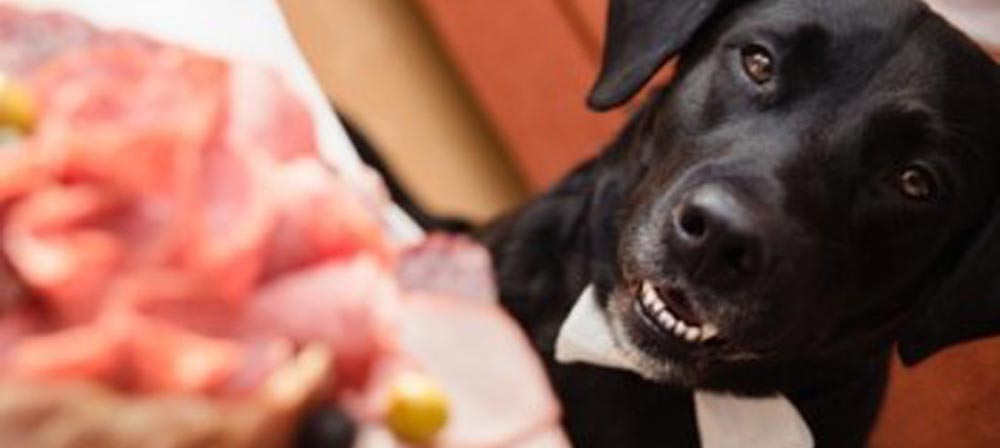
Acute pancreatitis is most common around the christmas break as millions of dogs are treated to large amounts of very fatty leftovers which their bodies simply can't handle.
Although pancreatitis can occur in any dog, it is more common in females than males and older, overweight and relatively inactive dogs are particularly at risk. Some breeds are also more prone to pancreatitis than others with Miniature Schnauzers, Miniature Poodles and Cocker Spaniels having the highest incidence.
What Treatments Are Available?
Whether your dog is suffering from a bout of acute pancreatitis or a long-running chronic episode, your first step should always be to consult your vet. For acute cases, vets will usually withhold food and fluids for a day or two to give the pancreas time to rest and to slow the production of digestive enzymes. Your vet may administer drugs for pain and/or to help ease nausea and vomiting. In some cases, IV fluids may also have to be given.
Once back home, it is important to follow your vet's instructions until your dog is back on his feet.
Following an acute episode, your vet will likely recommend a prescription diet specifically designed for dogs recovering from pancreatitis. Although we at All About Dog Food are not the biggest fans of prescription diets (find out why here), we would recommend sticking with their recommended food at least until the episode has subsided, after which we can start to look at a more nutritious, long term solution.
Don't forget to provide plenty of fresh, clean water to avoid dehydration.
Feeding Dogs with Pancreatitis
Getting the diet right is absolutely crucial for both managing chronic pancreatitis and preventing future acute episodes. The primary aim should always be to minimise the workload on the pancreas by only giving it nutrients that it can easily process and avoiding anything that could put it under unnecessary strain.
Please note that these guidelines are meant for adult maintenance only. For puppies, nursing females or for dogs with other concurrent health conditions, it is best to consult your vet.
So what are the options?
Pancreatitis diet checklist
- Low in fat (between 5% and 10% dry matter)
- Highly digestible (hypoallergenic & clearly labelled)
- Moderate protein (between 20% and 30% dry matter)
- Low to moderate NFE carbs (no more than 60% dry matter)
- No added sugars
The button above will take you to a list of foods that tick these boxes but the list is not exhaustive so you may also want to ask your favourite dog food manufacturers if they have something that would also fit the bill.
Prescription diets
There are plenty of prescription diets out there specifically designed to manage pancreatitis and for many dogs they undeniably work well. Most vets will, of course, recommend this option but what they probably won't tell you is that many over-the-counter foods fulfil essentially the same nutritional criteria as the prescription diets and can be used to effectively manage pancreatitis at a fraction of the price.
Over-the-counter dog foods
As we mentioned above, the main dietary aim is to make life easy for the pancreas and although the specialist prescription diets can do that admirably, so can many regular pet foods.
Fat
Since one of the pancreas' main roles is the breakdown of fats, the easiest way to reduce its workload is to feed a low fat diet. High quality named animal fats are also better than lower grade vegetable fats or fats from unknown sources.
Digestibility
A food that is easy to digest is good for all dogs but for dogs with pancreatitis, it's really essential. Look for foods with good, bio-appropriate ingredients and try to avoid any of the nasties (the ingredients we highlight in red and yellow) that can put excessive strain on the digestive system.
Protein
The pancreas also helps to digest proteins so you will want to avoid foods with very high protein levels. With protein, though, quality is always much more important than quantity. The best protein for dogs comes from high end, named meat ingredients. If the food contains too many plant protein supplements (like pea protein, maize protein, soya etc) that's generally not a great sign.
Carbs
Less carbs also means less work for the pancreas so avoid foods with high percentages of NFE carbs or too many starchy 'fillers' like white rice, white potato, maize, tapioca, pea starch etc.
Sugar
Added sugars in dog foods are never a good thing but for dog's with pancreatitis they are certainly worth avoiding.

Home-prepared food
A suitable home prepared diet, be it cooked or raw, can work wonders for dogs with digestive problems like pancreatitis but careful planning is crucial. The points above are a good place to start but to fully cover recipe formulation for pancreatitic dogs is, frankly, an article in itself which will have to go on to the to-do list for now. In the meantime, though, this page provides a fairly comprehensive guide on the subject.
 Treats, leftovers and tidbits
Be sure to avoid any treats, tidbits and table scraps that are high in fat or of a low quality - the Treat Directory will help you to find suitable alternatives. Make sure other family members and friends are also onboard with this as even a slight indiscretion cold result in another bout of pancreatitis.
It is also important to make sure your bins and pet food storage containers are well and truly dog-proof.
Supplements
Certain supplements may also help reduce the risk of acute pancreatitis or control the effects of chronic pancreatitis. You might be able to find them included in complete foods or you can add them to your dog's diet yourself.
Pancreatic digestive enzyme supplements have been reported to help some dogs with pancreatitis while fish body oils (such as salmon oil or EPA oil but not cod liver oil), can help to lower blood lipid levels which may reduce the workload on the pancreas.
Probiotics and prebiotics can help with digestion and may aid in the management of pancreatitis. The most common prebiotics in pet food include Mannan-oligosaccharides (MOS), fructo-oligosaccharides (FOS), inulin and chicory extract.
Changing diets healthily
Whatever food you decide to go with, be sure to introduce it gradually (over the course of at least a week or two) to give the system plenty of time to adjust and to make it easier for you to spot and rectify any potential issues early on. You can find our guide to changing diets here.
How long should my dog stay on this diet?
How long your dog should remain on a low-fat diet depends on the type and severity of their pancreatitis.
For dogs recovering from a one-off, mild bout of acute pancreatitis, a low-fat diet is usually recommended for several weeks. If no further symptoms occur during this time, your vet may suggest gradually reintroducing a more standard diet for your dog. This may be one that’s still moderate in fat to reduce the chance of future flare-ups.
But, if your dog has experienced multiple episodes or is living with chronic pancreatitis, they’re likely to need a low-fat, highly digestible diet on a long-term – and in some cases, lifelong – basis. This approach helps prevent overstimulation of the pancreas and supports ongoing digestive health.
It's also a good idea to have regular check-ups with your vet are essential. They can assess your dog’s progress, run any necessary blood tests, and help fine-tune their diet over time. Sticking to a tailored plan can make a big difference to your dog’s long-term wellbeing.
What should I not feed a dog with pancreatitis?
When it comes to managing pancreatitis, knowing what not to feed is just as important as choosing the right food. High-fat ingredients are the biggest offenders, as they can put unnecessary strain on the pancreas and increase the risk of a relapse.
Avoid feeding your dog:
- • Fatty meats such as sausages, bacon, or lamb chops
- • Skin-on poultry or fatty beef cuts
- • Greasy, fried foods
- • Full-fat dairy like cheese, cream, or butter
- • Leftovers, scraps, or anything rich, salty, or heavily seasoned
Even treats should be low in fat and carefully chosen. When in doubt, always check with your vet before introducing new foods. A single indulgent snack could undo weeks of progress in recovery.
Your Experiences
If your dog has suffered with pancreatitis, we would love to hear from you in the comments section below. What worked and what didn't? How would you do things differently in the future? Please do let us know as your tips could make all the difference to other dog owners out there.
Comments

Are you sure you want to delete this comment? It cannot be undone.
Advertisement

Advertisement



Cecil3 •one year ago
Well Cecil is still doing ok. He has not vomited for close to a month. It may also be related to his yeast rash which I have been unable to eliminate, I can only treat it when it gets bad. I think the medicated shampoo might be upsetting his stomach too.
I did reduce his protein a little more, and I am now rotating his meals every 3-4 days. He gets chicken with rice, sweet potatoes, peas, and broccoli for a few days, and then he gets chicken with rice, double sweet potatoes, and some corn for a few days, and then back to the other recipe. I have also increased his meals from 3 per day to 5 per day, and I wake up in the middle of the night to feed him one of his meals so they are evenly spaced.
I am also keeping track of his daily calories. Cecil has lost most of the weight he gained a few months ago, however that is because I am not giving him any supplemental calories (bread, etc) to raise / maintain his calories. I am now trying to see if I can lower his metabolism so he will not require as many calories per day. I know this happens with humans, so I am seeing if I can lower his metabolic rate so he will not need to eat as much food each day (and thus reducing the work for the pancreas and liver).
Cecil's last blood test was 11 months ago, when his ALP and GPT? (I forget) were off the chart and the Vet told me that he would not recover. If he continues to do ok we plan on having another blood test taken in about 6 weeks, but I already know it will not be good. He needs a blood test anyway to monitor his thyroid medication, but the tests have become depressing for me.
Hopefully his experiences will be helpful for some other dogs. Good luck.
Cecil3 •2 years ago
This post is in relation to Morning sickness, it is something Cecil has been dealing with over the past couple of years but it has gotten worse: I believe I read a few people complain here about their dog throwing up and perhaps it is the same issue that I have with Cecil. Cecil will throw up a little of a mostly clear liquid, and he will usually do so in the morning. It was happening about once a month but it got worse a couple weeks ago. I originally thought it was due to his thyroid and liver medication, but then he threw up his bread covered pills before they even dissolved so it is not his medication that is causing the problem.
I think the problem got worse because he is likely eating something in the yard that has fat or protein (my landlord dumps waste food including bones, etc in the yard as fertilizer). I have been watching him closely when he goes outside now to make sure he is not eating anything when he goes outside.
Anyway I am referring to this as morning sickness because it really only happens in the morning, and Cecil is also very reluctant to eat in the morning (even on days when he has not vomited). Cecil gets 3 meals per day, spaced 6 hours apart (10am, 4pm, 10pm). I believe that the issue may be related to him having an empty stomach in the morning (thus why it is often just a clear liquid). So for the past few days I have been getting up at 4am and feeding him 1 slice of egg white french toast (1/2 an egg white, 40ml bottled water, 1 slice white bread, fried dry in a non stick pan). I have it preprepared and precut into small bite size pieces in advance so I just have to get out of bed and take it out of the refrigerator and give it to him, and then I can go right back to sleep.
So far the results are very encouraging. His appetite in the morning has increased and he has not thrown up yet since I started feeding him a 4th small meal in the middle of the night. Hopefully this information is helpful to those who complained about their dogs throwing up. I would also be very careful about how much fat and protein they are eating. Cecil has severe pancreatitis and if he eats any more than 2-2.5g of protein per pound of bodyweight per day he starts to have issues. Good luck.
anto135 •2 years ago
Why does this article advise against cod liver oil?
Cecil3 anto135
•2 years ago
anto135
•2 years ago
I would be very careful giving your dog any fat supplements. Perhaps it might be ok for dogs with very mild pancreatitis, but as the disease progresses added fat may cause discomfort, or worse. You probably want to take your dog on long walks and see if you can notice any signs of discomfort between the days that you give the supplement and the days that you do not. Diarrhea, vomiting, lethargy, etc are all great signs of severe pancreatitis flareups, but there are more subtle signs when the pancreas is causing pain or discomfort (like wanting to end a walk early, less trotting on walks, etc). Oils are pure fat and fat is very bad for dogs with pancreatitis. For me oil and fat supplements are just not worth the risk. Cecil requires a diet with as little fat as possible. Even just one mouthful of a fatty food that he finds on the ground can make him ill. Good luck.